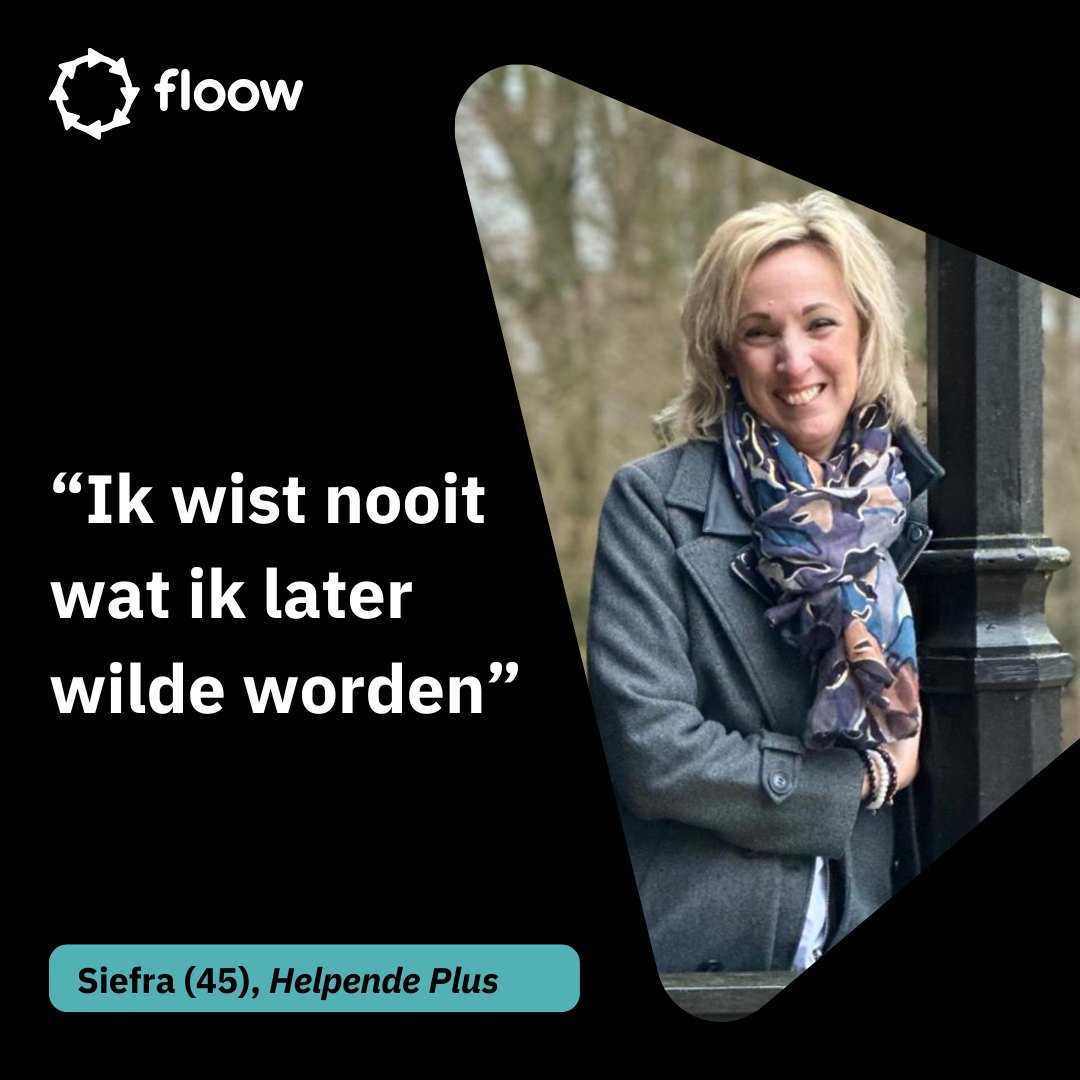
At Floow.ai we think it's important to make real stories from care visible. In a series of short interviews we talk to people who work in care or have made the switch.
This time the spotlight is on Siefra (45). She never quite knew what she wanted to be, until fate lent a hand. After years working in a bags-and-jewellery shop, she found herself at home when the doors closed. An application 'out of necessity' at Buurtdiensten brought her into contact with older people for the first time — and that changed everything. Her story shows how a later-life career switch is not only possible, but can reveal a passion you never thought you had.
You previously worked in a bags-and-jewellery shop. What was it like when you first walked onto a ward for people with dementia?
“That was an enormous change and very impressive. You hear stories beforehand, of course, but you have no idea what to really expect. At first I mostly found it very sad to see what dementia does to a person. It made a deep impression how differently residents react: one stops eating, while another is very restless or starts throwing things.”
You never knew what you 'wanted to be'. Was there a specific moment when something clicked and you knew: this is my place, I'm going to work in care?
“That was at Buurtdiensten, where I offered household help to older people, among other things. I noticed I really enjoyed being with older people; they were always happy when you came by and it truly meant something to them. I'd go for a drive or have coffee with a client with early-stage dementia. That's when I thought: maybe I should do more with this.”
You started in 2018 as a living-room worker at De Zorgcirkel. How did that role, focused on atmosphere and wellbeing, shape you before you moved into the medical side?
“It was an instructive but sometimes tough time. You come in as a 'stranger' on a ward where colleagues have sometimes worked for thirty years, so I had to find my place. But precisely in that role I really got to know the residents through the daily structure of the living room. You learn how important atmosphere and wellbeing are before you even look at the medical procedures.”
After about three years you decided to train as a Helpende Plus. Why did you take that step, and did you see obstacles ahead?
“I got the feeling I could do more than just serve sandwiches and make coffee, and the whole clinical picture really appealed to me. Other living-room workers had also started the training, so I went to find out more. I did find it exciting because I had a big family with four children to take into account.”
Can you describe a moment from your current work that gives you a feeling of fulfilment?
“Sometimes clients arrive who are very restless and feel they've lost their grip on life. By calmly guiding a client, winning their trust and offering good personal care — support with personal hygiene and clean clothes — you see someone change completely. When family members say after two weeks how well the client looks again and how positive the change is, that's really the crowning glory of my work.”
What would you say to people who, like you back then, don't yet know what they want to be — about switching to (dementia) care?
“Go and explore, and don't be put off by the prejudices. Many people think of care as just 'washing bottoms', but it's about human contact and taking away fear in vulnerable people. If you work with your heart, it doesn't even feel like work. Just step into a care facility and see what it does to you.”
We warmly thank Siefra for her openness and inspiration. Her story shows how valuable working in care can be — for yourself and for the people you help along the way.